
 TR
TR
 EN
EN


INTRODUCTION
From a geopolitical perspective, the Ottoman Empire, which exercised control over some of the most strategically significant regions of the world, was a multinational state that managed to preserve its power for centuries despite its cosmopolitan character. Nevertheless, communication difficulties occasionally arose between the central administration and the provinces, and meaningful interaction between the ruling elite and the broader population was not always possible. The provincial tours initiated during the reign of Sultan Mahmud II helped to alleviate this problem to some extent, enabling the populace to convey their concerns directly to the highest authority of the state. In this context, Sultan Mahmud II undertook a series of journeys between 1828 and 1837 to major settlements such as Tekirdağ, Çanakkale, Shumen, Gemlik, Varna, and İzmit in order to identify local problems and needs firsthand and to listen personally to the demands of the people. These journeys set an example for subsequent Ottoman sultans (1-4). One of his two sons who later ascended the Ottoman throne,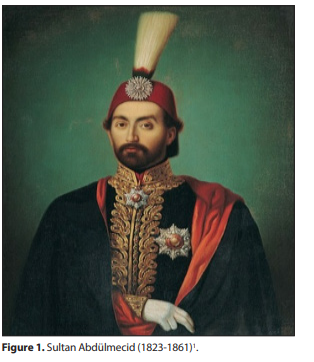
Sultan Abdülaziz, even embarked on a journey to Europe in 1867 (2,5). This article focuses on Sultan Abdülmecid’s (Figure 1) Rumelia journey of 1846, undertaken as a continuation of the tradition of royal tours inherited from his father, Sultan Mahmud II, and on the vaccination practices carried out within this context. The 32-page Seyahatname-i Hümayun (Imperial Travelogue), which serves as a travel diary, constitutes the sole primary source on the subject (Figure 2). Given that it was most likely published in 1846, the same year in which the journey took place, this source will serve as our principal reference. Before examining the details of the journey, it is useful to briefly review the contemporary state of smallpox vaccination practices in the Ottoman Empire during this period. It is known that shortly after Dr. Edward Jenner announced the effectiveness of the cowpox vaccine, the vaccine was imported from Europe and began to be used in İstanbul in 1801. As part of the reform initiatives launched with the proclamation of the Tanzimat, the Imperial School of Medicine (Mekteb-i Tıbbiye-i Şahane), established in 1839, was assigned by Sultan Abdülmecid’s decree of 20 May 1840 to provide free smallpox vaccinations to children. Vaccines used during this period were primarily imported from Europe. However, it is also known that efforts were undertaken to administer vaccines prepared from serum obtained from the pustular material of infected cows brought from Beşiktaş under the direction of the Chief Physician, İsmail Pasha. These initiatives represented an early attempt at local 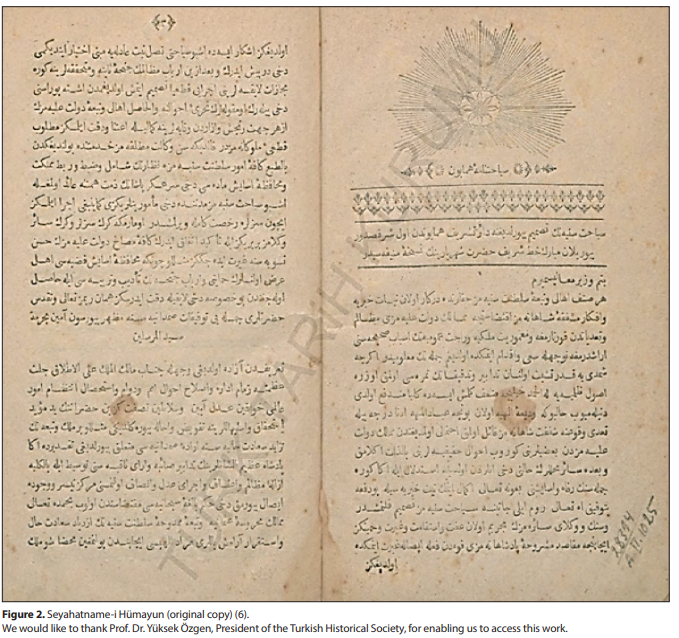
vaccine production and application within the Ottoman Empire. We would like to thank Prof. Dr. Yüksek Özgen, President of the Turkish Historical Society, for enabling us to access this work. It has been recorded that Sultan Abdülmecid also took a close interest in the severe smallpox epidemic reported in İstanbul in 1845. One of the greatest tragedies and principal catalysts behind the mass vaccination campaign organized during his Rumelia journey of 1846 was the devastating smallpox (variola) epidemic that had struck İstanbul just one year earlier, in 1845. Emerging insidiously in the neighborhoods of İstanbul in early 1845, the virus rapidly developed into a major epidemic. What distinguished this outbreak from other epidemics of the period and placed the imperial administration on high alert was the fact that the disease penetrated the imperial palace itself, affecting Sultan Abdülmecid’s own family regardless of social status. The deaths of infants and children within the palace constituted the most significant turning point in motivating the Sultan to undertake a personal struggle against the disease. During the epidemic, the shortage of hospital capacity, coupled with child mortality even within the palace, led Sultan Abdülmecid’s mother, Bezmiâlem Valide Sultan, to establish the Bezmiâlem Valide Sultan Vakıf Gureba Hospital. Throughout the course of the epidemic, vaccination activities continued not only at the Imperial School of Medicine but also at Vakıf Gureba Hospital and at vaccination stations established in Üsküdar, Bayezid, and Eyüp. Vaccinators trained at the medical school were dispatched to the provinces to supervise vaccination practices and ensure the preservation and proper administration of vaccine material. While the 1845 epidemic was still ongoing, a development of revolutionary significance in the history of medicine took place. The traditional method of variolation (çiçekleme), which had been observed in İstanbul by Lady Mary Wortley Montagu, the wife of the British ambassador, and subsequently introduced to Europe in the early eighteenth century, gradually began to be replaced by Edward Jenner’s safer and more effective cowpox vaccination (vaccination) method. At the same time, the Imperial School of Medicine assumed a more active role in epidemic control. By order of Sultan Abdülmecid, Abdülhak Adnan Efendi, founder and chief physician of the Mekteb-i Tıbbiye-i Şahane (Imperial School of Medicine), together with his team, developed a series of emergency measures. Most importantly, a mandatory vaccination policy was introduced. Orders were issued requiring the vaccination of every child born in İstanbul, as well as all unvaccinated individuals. Vaccination officers were appointed to neighborhoods, and the importance of vaccination was communicated to the public through mosques and other public venues. In order to overcome public reluctance toward vaccination—arising from both religious concerns and popular superstition—one of the earliest examples of a public health incentive program was implemented during the 1845 epidemic: • Free vaccination services were offered to the public at designated centers in İstanbul and at the Imperial School of Medicine. • Financial assistance and gifts were provided by the state to impoverished families who brought their children for vaccination, thereby significantly increasing vaccination coverage. The road to the Rumelia journey: The extensive struggle against the epidemic in İstanbul in 1845, together with the demonstrated success of vaccination in controlling the outbreak, convinced Sultan Abdülmecid of the power and value of preventive medicine. Consequently, when he embarked upon his Rumelia journey in 1846, he resolved to bring preventive healthcare services to the provincial population by taking vaccination teams with him. By the order of Sultan Abdülmecid, a pamphlet was printed in 1846 at the printing house of the Mekteb-i Tıbbiye-i Şahane (Imperial School of Medicine) in İstanbul and distributed throughout the provinces in order to explain the benefits of smallpox vaccination and promote the most effective vaccination methods. Published in four languages—Turkish, Armenian, Greek, and Judeo-Spanish—and also known as Menâfiü’l-Etfal (Benefits for Children), this work is regarded as one of the major milestones in the institutionalization of vaccination practices within the Ottoman Empire. During the same period, in response to the growing negative perceptions of vaccination among the public, a fatwa was issued in 1847 by Şeyhülislâm Ârif Hikmet upon the instruction of Sultan Abdülmecid. The fatwa declared that smallpox vaccination provided protection against smallpox and that its administration was compatible with Islamic law (Sharia). In an effort to personally dispel public skepticism regarding vaccination, Sultan Abdülmecid requested that children be vaccinated in his presence during the Rumelia journey. Accompanying him on the tour were not only the Chief Physician, İsmail Pasha, but also members of the academic staff of the Mekteb-i Tıbbiye-i Şahane, including Sigmund Spitzer, Constantine Caratheodory, and J. Paleolog, who personally supervised and carried out vaccination activities. Whenever deemed necessary, vaccination officers were also dispatched to private homes to inform families about the benefits and safety of vaccination. Following these consultations, parental consent was obtained and vaccination procedures were administered accordingly