
 TR
TR
 EN
EN


ABSTRACT
Objective
Multidrug resistant gram-negative bacteria infections are major problem especially in immunocompromised patients who have received hematopoietic stem cell transplantation. In this study, we aimed to compare the effects of colistin-based and ceftazidim-avibactam based therapy in children with hematopoietic stem cell transplantation. The medical records of pediatric patients who received hematopoietic stem cell transplantation between February 2019 and May 2021 were assessed retrospectively. A pre-structured case report form was used to record demographics, underlying diseases, severity of illness upon admission, detailed description of index infection requiring ceftazidim-avibactam administration, data related to colistin, ceftazidim-avibactam, or other antibacterial administration, clinical and microbiologic responses, outcome, and adverse events. A total of 183 pediatric patients had hematopoietic stem cell transplantation between February 2019 and May 2021. Eighty-nine bacterial infections were detected, and seventy-two Gram-negative microorganisms were isolated in 57 of the patients. Fourteen (24.6%) of these patients had 18 (25%) multidrug resistant gram-negative microorganisms. Nephrotoxicity occurred in 5 of 7 (71%) of the patients who received colistin-based treatment, whilehepatotoxicity occurred in 2 (28.5%) patients. Nephrotoxicity developed in 3 (42.8%) patients and hepatotoxicity in 2 (28.5%) patients in the ceftazidim-avibactam -based treatment group. Ten (71.4%) patients had clinical and microbiologic responses; however four patients died for various causes. In our study, we found that both colistin and ceftazidime-avibactam had similar survival rates in multidrug-resistant gram-negative infections in children who underwent hematopoietic stem cell transplantation. Organ toxicities observed in patients were mostly temporary. In addition, we observed that nephrotoxicity was less common in patients receiving ceftazidime-avibactam-based treatment. We think that colistin or ceftazidime-avibactam-based antibiotic combinations can be used successfully in pediatric patients with multidrug-resistant gram-negative infections
KEYWORDS
Multidrug-resistant gram-negative bacteria, ceftazidimavibactam, colistin, hematopoietic stem cell transplantation, child
INTRODUCTION
Antimicrobial resistance is a life-threatening global problem for hematopoietic stem cell transplant (HSCT) patients. Multidrug resistant (MDR) gram-negative bacteria have serious effects on transplant patients, increasing the likelihood of bacterial colonization while increasing the risk of severe invasive infection, graft failure, and death (1,2). These microorganisms are resistant to almost all antibiotics, including carbapenems. Therefore, treatment options are limited to a few broad-spectrum antimicrobial drugs such as colistin (CST) (3,4). Unfortunately, acquired resistance to CST has emerged and become a global problem (5). Carbapenemresistant Enterobacteriaceae (CRE) have recently emerged in the pediatric population and have led to outbreaks of infections that have caused an increase in mortality due to the greatly limited treatment options (6,7). Since there is virtually no safety and pharmacokinetic data on CST in these patient groups, these organisms behave as if they are pandrug resistant (PDR). Recently, the combination of ceftazidime and avibactam has been approved for the treatment of CRGNB (8). Various clinical studies using ceftazidime-avibactam (C/A) for CRE infection have shown that the overall response rate ranged from 45% to 74% (8). To date, no studies have evaluated the use of C/A in pediatric HSCT patients with Gram-negative infections. In this study, we aimed to compare the clinical outcomes and side effects of existing drugs in children with HSCT and CRS Gram-negative sepsis and to examine the effects and toxicities of CST-based and C/A-based antibacterial treatments.
MATERIALS AND METHODS
Research Design This study includes a retrospective observation of pediatric patients who underwent HSCT between February 2019 and May 2021 and were infected with Gram-negative microorganisms. The study was conducted at the Pediatric Bone Marrow Transplantation Unit of İstanbul Yeni Yüzyıl University Gaziosmanpaşa Hospital (EBMT CIC number: 0459). Our center performs an average of 90 HSCTs per year. The database created examined all cases of gram-negative infections occurring between February 1, 2019, and May 31, 2020. Additionally, the clinical records of patients with MDR gram-negative infections were obtained. All demographic data, underlying primary diseases, transplantation procedures, MDR gram-negative infection episodes, and survival data were recorded. All MDR gram-negative infections that occurred after the start of the preparation regimen for bone marrow transplantation were analyzed. CST was preferred for the treatment of individuals infected with carbapenemresistant and CST-sensitive bacteria. Only infectious disease specialists were permitted to prescribe C/A for the treatment of microbiologically confirmed MDR Gram-negative infections in critically ill patients. Both antibiotics were combined with other antibiotics for an additive effect. Data Analysis At least two researchers evaluated the medical, laboratory, and pharmacological data of eligible individuals. A case report form was used to record demographic information, comorbidities and primary diseases, disease severity at admission, a detailed description of the infection requiring C/A, data related to C/A, the dose and duration of CST or other antimicrobials, clinical and laboratory responses, side effects, and outcomes. Definitions Criteria from the United States Centers for Disease Control and Prevention were used to define hospitalacquired infections (9). Therefore, MDR refers to the absence of acquired susceptibility to at least one agent in three or more antimicrobial categories, while extremely drug resistant refers to the absence of acquired susceptibility to all agents in at least two or fewer antimicrobial categories (10). PDR indicates the absence of acquired susceptibility to all agents in all existing antimicrobial categories (10). If at least one strain of Escherichia coli, Klebsiella aerogenes, Klebsiella oxytoca, Klebsiella pneumoniae, or Enterobacter spp. is proven to be resistant to the following antibiotics: 1) imipenem, 2) imipenem/rellebactam, 3) meropenem, 4) doripenem, 5) ertapenem, or 6) meropenem/vaborbactam, these are classified as “CRE” (10). 3. The degree of organ toxicity was analyzed based on the National Cancer Institute”, Common Toxicity Criteria for Adverse Events” scales (11). Evaluation of the results The first negative culture obtained after initiating CST or C/A-based therapy was used to determine the timing of the microbiological response. Improvement/remission of the main symptoms was defined as the clinical response. The following outcomes were evaluated within 15 days after starting CST or C/A: If all symptoms had resolved and no further antimicrobial treatment was required, it was considered a “cure, complete recovery”; if symptoms had improved but antimicrobial treatment was continuing, it was considered “improvement”; and if there was worsening or death, it was considered “failure”. Additionally, long-term outcomes within 30 days after starting CST or C/A-based treatment were examined using the 15-day protocol, but relapse was also considered. Safety Assessment To evaluate patients during CST and C/A treatment, the World Health Organization International Drug Monitoring Center adverse reaction standard criteria were used (12). Microbiological Tests Both clinical and surveillance data were used in this study. The BACT-Alert system (bioMerieux®, Marcy l’Etoile, France) was used for blood cultures. The VITEK-2 automated system (bioMerieux®) was used for diagnosis and antimicrobial susceptibility testing. C/A susceptibility was determined by E-test according to the following susceptibility breakpoints: zone diameter 13 mm (C/A disk content: 10-4 g) and minimum inhibitory concentration (MIC) 8 g/mL. The reference medium microdilution technique was used to determine CST susceptibility (13).
RESULTS
Between February 2019 and May 2021, a total of 183 pediatric patients underwent HSCT. During this period, 89 bacterial agents were detected in 72 patients (39.3%) in different regions. A total of 72 (80.9%) gram-negative infections were detected in 52 (72.2%) of these patients. A total of 18 (25%) MDR gram-negative infections were detected in 14 (27%) of these 52 patients (Figure 1). All these microbial agents were resistant to carbapenems, and the MIC of all microorganisms was at least 16, while the ertapenem MIC value was at least 8. The choice of treatment for patients was determined based on the results of the antibiotic susceptibility test. All patients continued to show signs of sepsis despite empirical treatment. Seven patients received CST-based combination therapy. The remaining patients received C/A-based combination therapy. The demographic, microbiological, and clinical characteristics of these patients are shown in Table 1 and Table 2. Colistin-based therapy The mean time between microbial agent growth in culture and initiation of CST was 2.6 days (range 1-4 days). CST was administered at the recommended dose of 5 mg/kg twice daily based on antibiotic susceptibility and was used for an average of 14 days (range 5 to 22 days). All patients received combination therapy with CST. The microorganism could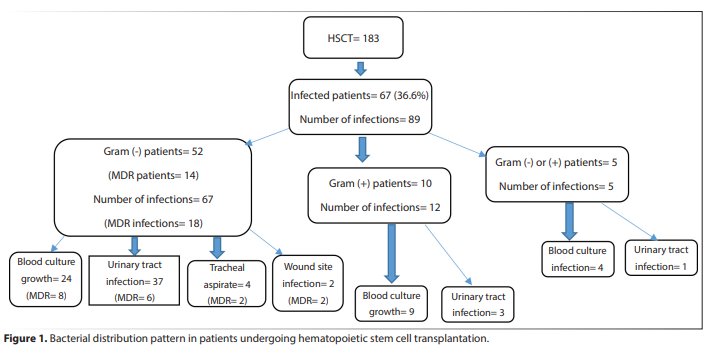
| Patient # | 1 | 2 | 3 | 4 | 5 | 6 | 7 |
|---|---|---|---|---|---|---|---|
| Age/Sex | 14 mo/F | 9 y/M | 15 y/M | 6 y/F | 11 y/F | 13 y/F | 15 y/M |
| Patient's country of origin | Türkiye | Tunisia | Iraq | Iraq | Iraq | Türkiye | Iraq |
| Disease | HLH | ALL | SAA | PNH-AAA | FAA | TM | SAA |
| HSCT type/Source | Sibling/BM | Haplo/PDSC | Sibling/BM | Sibling/BM | Sibling/BM | Non-relative/PDSC | Non-relative/PDSC |
| Microbial agent | P. aeruginosa | P. aeruginosa | Elizabethkingia meningoseptica | E. coli | E. coli | K. pneumoniae | K. pneumoniae |
| Site of the microorganism | Wound site | Urinary tract infection | Blood culture growth + urinary tract infection | Urinary tract infection | Blood culture growth | Blood culture growth + urinary tract infection | Blood culture growth + wound site growth |
| Post-transplant (day) | 20 | 3 | 86 | 8 | 2 | 52 | 13 |
| Neutropenia during infection | Yes | Yes | No | Yes | Yes | No | No |
| Accompanying problems | No | No | TMA+skin/liver GvHD+PRES | VOD+ATN | No | GI GvHD+VOD+PRES | Liver GvHD |
| ICU admission | No | No | No | No | No | Yes | No |
| Intubation | No | No | No | No | No | Yes | No |
| Inotropic support | No | No | No | No | No | Yes | No |
| Prior antibiotic exposure | PIP-TAZ | MEM | None | MEM+AMK | SEF | SEF+FOS+AMK | MEM+AMK |
| Time elapsed between the onset of infection and CST initiation (day) | 3 | 2 | 4 | 2 | 4 | 2 | 1 |
| CST duration (day) | 14 | 5 | 20 | 15 | 10 | 12 | 22 |
| Other antibiotics with CST | PIP-TAZ | MEM | TGC+MEM | AMK | MEM | MEM | TGC |
| Microorganism eradication time (day) | 12 | 4 | No eradication | 4 | 6 | No eradication | 17 |
| Side effects | No | Nephrotoxicity/Hepatotoxicity | Nephrotoxicity/Hepatotoxicity | Nephrotoxicity | No | Nephrotoxicity | Nephrotoxicity |
| Outcomes/Reasons | Alive | Alive | Exitus/Sepsis | Alive | Alive | Exitus/Sepsis and GI GvHD | Alive |
not be eradicated in two patients (patients #3 and #6). These patients died of sepsis on the 15th and 12th days of CST-based therapy, respectively. In the remaining five patients, the microorganisms were eradicated within an average of 8 days (range 4-14 days) after starting CST. Nephrotoxicity developed in 5 of the 7 (71%) patients receiving CST-based therapy, while hepatotoxicity developed in 2 (28.5%) patients. Side effects were reversible in all patients except one (patient #3) (Table 1). Ceftazidime-avibactam-based therapy The mean time between microbial agent growth in culture and initiation of C/A was 4.8 days (range 1-10 days). C/A was added to the existing antibiotic combination after a mean of eight days (range 3-14 days) following administration of the recommended dose of 62.5 mg/kg three times daily based on antibiotic susceptibility. All patients received combination therapy with C/A. The microbial agent was eradicated within an average of 4.3 days (range 1-11 days) after starting C/A therapy. Subsequently, a clinical and microbiological response was obtained in five of the patients. Patients #10 and #14 died on the 13th and 12th day of C/A treatment, respectively, due to excessive bleeding and respiratory failure (Table 2). Nephrotoxicity developed in 3 (42.8%) patients and hepatotoxicity in 2 (28.5%) patients in the C/A-based treatment group. The three patients who developed nephrotoxicity were
| Patient # | 8 | 9 | 10 | 11 | 12 | 13 | 14 |
|---|---|---|---|---|---|---|---|
| Age/Sex | 26 mo/M | 89 mo/M | 18 y/M | 35 mo/M | 48 mo/F | 25 mo/F | 93 mo/M |
| Patient's country of origin | Türkiye | Russia | Tunisia | Kosova | Ukraine | Türkiye/Arab origin | Ukraine |
| Disease | ALL | AML | ALL | NB | NB | TM | DK |
| HSCT type/Source | Non-relative/PDSC | Haplo/PDSC | Non-relative/PDSC | Autologous/PDSC | Non-relative/PDSC | Relative/BM | Non-relative/PDSC |
| Microbial agent | K. pneumoniae | P. aeruginosa | K. pneumoniae | K. pneumoniae | E. coli and K. pneumoniae | K. pneumoniae | Chryseobacterium indologenes |
| Site of the microorganism | Blood culture growth | Tracheal aspirate | Blood culture growth | Urinary tract infection | Blood culture growth + tracheal aspirate | Blood culture growth | Urinary tract infection |
| Post-transplant (day) | +20 | +86 | +8 | +6 | +36 | -15 | +82 |
| Neutropenia during infection | No | No | Yes | Yes | No | Pre-transplantation | No |
| Accompanying problems | Respiratory failure | Cerebral toxoplasmosis | Respiratory failure, primary graft failure | No | Respiratory failure | Respiratory failure | MDR+CMV reactivation + secondary graft failure |
| ICU admission | No | Yes | Yes | Yes | Yes | Yes | Yes |
| Intubation | No | Yes | Yes | Yes | Yes | Yes | Yes |
| Inotropic support | No | Yes | Yes | Yes | Yes | Yes | Yes |
| Prior antibiotic exposure | CST+MEM | MEM+AMK | CST+AMK | MEM | MEM+AMK | MEM+AMK | CST |
| Time elapsed between the onset of infection and C/A initiation (day) | 4 | 6 | 3 | 3 | 10 | 3 | 1 |
| C/A duration (day) | 8 | 17 | 13 | 7 | 12 | 10 | 12 |
| Other antibiotics with C/A | TGC+FOS | MEM | CST+AMK | MEM | CST | CST+AMK | MEM |
| Microorganism eradication time (day) | 8 | 13 | 14 | 4 | 14 | 5 | N/A |
| Side effects | No | No | Nephrotoxicity/Hepatotoxicity | Nephrotoxicity | Nephrotoxicity | No | Nephrotoxicity/Hepatotoxicity |
| Outcomes/Reasons | Alive | Alive | Exitus/Sepsis | Alive | Alive | Alive | Exitus/Sepsis and massive GI bleeding |
also receiving other drugs with nephrotoxic properties, such as amikacin and CST. There were no treatment interruptions due to side effects. Side effects were reversible except in one patient who died due to sepsis and massive gastrointestinal bleeding (patient #14) (Table 1).
DISCUSSION
Infections caused by MDR gram-negative bacteria are becoming increasingly common in HSCT recipients. Invasive MDR gram-negative infections are associated with high mortality rates in transplant recipients due to limited treatment options and antimicrobial toxicity (14). At our center, a total of 183 pediatric patients underwent HSCT between February 2019 and May 2021. During this period, 89 bacterial agents were detected in 72 patients (39.3%) in different regions. A total of 72 (80.9%) gram-negative infections were detected in 52 (72.2%) of these patients. A total of 18 (25%) MDR gramnegative infections were present in 14 (27%) of these 52 patients (Figure 1). All of these microbial agents were resistant to carbapenems, and the MIC of all microorganisms was at least 16, while the MIC value of ertapenem was at least 8. The choice of treatment for patients was determined based on the results of the antibiotic susceptibility test. All patients showed persistent septic symptoms despite empirical treatment. Seven patients received CST-based combination therapy. The remaining patients received C/A-based combination therapy. In children, the incidence of infections caused by MDR bacteria has increased in line with that seen in adult populations. The mortality rate for individuals with carbapenem-resistant-K. pneumoniae ranges from 22% to 45%. This rate is higher in patients with concurrent infections or comorbidities (15). According to data from the last decade, the prevalence of carbapenem resistance in children in the United States increased from 0% to 0.47% among Enterobacterales isolates between 2000 and 2011, Pseudomonas aeruginosa isolates increased from 9.4% to 20% between 1999 and 2012, and among Acinetobacter baumannii isolates, it increased from 0.6% to 6.1% between 1999 and 2012 (16-18). Between 2012 and 2013, a multicenter study in Italy found a twofold increase in CRE colonization and a fourfold increase in the incidence of CRE bloodstream infections (19). A large-scale study conducted in the United States between 2012 and 2013 found that only 0.6% of children under the age of 18 were infected with CRE (20). CRE is frequently isolated in pediatric units when it is highly endemic. In nonendemic regions, it is usually detected in adult intensive care units and oncology services (21-23). Therefore, internationally published pediatric data (United Kingdom, Spain, Italy, and United States) have been consistent with sporadic outbreaks of CRE infections (24-26). Pediatric CRE infections have been shown to increase the risk of death by 6 to 11 times compared to non-CRE infections (27,28). On the other hand, there are also many studies that have found no worse outcomes in pediatric patients with CRE infections (29). Depending on the source of infection, the primary disease, and age, mortality rates in children with CRE infections range from 8% to 52% (in one small case series, the rate was 100%) (19,26-33). In our study, the mortality rate in MDR gram-negative infections was 28% (4/14). One of the patients who died in the CST group had severe aplastic anemia and severe concomitant diseases [transplant-related microangiopathy, grade III graft versus host disease (GvHD), and posterior reversible encephalopathy syndrome (PRES)]. The other was a patient diagnosed with thalassemia major who had severe gastrointestinal GvHD and PRES. Both patients were receiving multiple immunosuppressive drugs. One of the patients who died in the C/A group was a patient diagnosed with acute lymphoblastic leukemia (ALL) who had not yet achieved neutrophil engraftment. The other was a patient diagnosed with congenital dyskeratosis who experienced secondary graft failure due to MDR cytomegalovirus infection and massive gastrointestinal bleeding. A recently published study identified several important risk factors for mortality in 50 children with hospital-acquired CRE bloodstream infections. These included admission to a pediatric intensive care unit, intubation, and inotropic support (31). In this review, a meropenem MIC value >8 mg/L for the isolate significantly increased the likelihood of death [Overall rate, 13.9 (95% confidence interval, 1.5 to 125.6); p= 0.008). All of our patients (except patient #1) were admitted to the intensive care unit, received inotropic support, and required mechanical ventilation. Risk factors for CRE infection or colonization in children are comparable to those defined for adults. Most had underlying comorbidities or a history of intensive care unit admission (34-36). Prior antibiotic exposure (usually long-term broadspectrum antibiotics), medical device use (especially mechanical ventilation), intensive care unit stay, previous surgical interventions, and prolonged hospital stay are risk factors for CRE colonization or infection in children (26,27,29,37- 41). A recent study found that only carbapenem exposure was significantly associated with CRE infections in children (38). Other pediatric studies have shown that past carbapenem use is a risk factor for CRE infection (27,29,37,38,40,41). However, the association with non-carbapenem antibiotic use was less clear (29,39,40). With one exception (patient #6), all patients had a history of broad-spectrum antibiotic use. All of these patients were being treated for malignancy, immunodeficiency, or bone marrow failure. All patients had a catheter and were hospitalized for a long time because they were undergoing transplantation. Patient #11 had a history of previous surgery. Four patients (patient #6, #8, #12, and #14) were infected with MDR gram-negative microorganisms while being monitored in the intensive care unit. Individuals from regions endemic for carbapenemresistant enterococci can carry CRE to medical centers in nonendemic countries, which may require special precautions such as colonization screening and antibiotic treatment (21- 23,37,39). Interestingly, all patients except four (patient #1, #6, #8, and #13) were from outside Türkiye (Tables 1 and 2). The safety and pharmacokinetics of meropenem in children have been studied in several investigations (42,43). When higher doses of meropenem are administered via prolonged infusion in adults, the likelihood of achieving the pharmacodynamic target is higher for isolates with an MIC value of 8 mg/L (44). This strategy has been applied to pediatric patients with CRE infections (45). In pediatric population modeling, methods involving prolonged infusion and higher doses (40 mg/kg/8 hours per body weight) increased the likelihood of achieving meropenem bactericidal targets (46). In two pediatric studies, infections with isolates having a meropenem MIC value greater than 8 mg/L were associated with increased mortality, and all patients associated with isolates having a meropenem MIC value greater than 32 mg/L died (31). In this study, children infected with isolates with MIC values greater than 8 mg/L died at a higher rate than children receiving meropenem for isolates with MIC values less than 8 mg/L (100% vs. 45.5%). Furthermore, significant concerns have been raised regarding the likelihood of achieving the target MIC value of 4 to 8 mg/L for gram-negative pathogens in critically ill pediatric populations (46). Zheng et al. demonstrated that combining C/A with an antibiotic that is in vitro non-susceptible, such as carbapenems, tigecycline, and fosfomycin, could significantly reduce the 30-day mortality rate in critically ill patients with CR-K. pneumoniae infection (47). Due to differences between zinc concentrations in routine media and those at infection sites, carbapenem resistance in Enterobacteriaceae may be misdiagnosed using antimicrobial susceptibility testing techniques (48,49). These findings suggest that certain CREs examined in in vitro antimicrobial susceptibility tests may be in vivo susceptible. In clinical practice, polymyxins (polymyxin B and CST) have been considered as last-resort antibiotics for managing CRKP infections prior to C/A (50,51). However, there are no clinical studies evaluating a combination of C/A and polymyxins. Patients in both the CST and C/A groups were treated with different antibiotic combinations. Additionally, four patients in the CST group (patient #2, #3, #5, #6) and three patients in the C/A group (patient #9, #11, and #14) received concomitant meropenem therapy. We administered meropenem as an intravenous infusion at a dose of 40 mg/ kg every eight hours. Other patients were treated with various combinations such as piperacillin-tazobactam, amikacin, tigecycline, and fosfomycin (Table 1,2). C/A is approved in the European Union and the United States for the treatment of other infections caused by gramnegative organisms that can be treated with limited success in adults, including complicated urinary tract infections, pyelonephritis, complicated intra-abdominal infections, hospital-acquired pneumonia, and ventilator-associated pneumonia (52-54). In recent years, MDR gram-negative infections have become a serious public health problem. The treatment of these infections is particularly difficult in immunocompromised children who have undergone HSCT and is associated with high mortality rates. Assessing risk factors for acquiring MDR gram-negative infections based on local epidemiology may enable personalized empirical broad-spectrum antibiotic therapy. Clinical data for the treatment of MDR gram-negative infections are still limited and mostly based on observational studies. This is even more limited in these children. Antibiotic stewardship programs remain an important component in preserving the current effectiveness of antibiotics with a sensitive approach to antimicrobial treatment. New antibiotics can provide very successful treatments. However, the lack of pediatric studies leads to off-label use in this group. This study has some limitations, such as being a retrospective cohort study with a small sample size. Prospective or randomized controlled trials with more participants should be designed for future research. Second, mutations responsible for antibiotic resistance mechanisms could not be analyzed in our study. In conclusion, CST appears to be a good option in children with MDR gram-negative infections who have undergone HSCT. However, if these microorganisms are also resistant to CST, the use of C/A may be life-saving in immunocompromised patients.